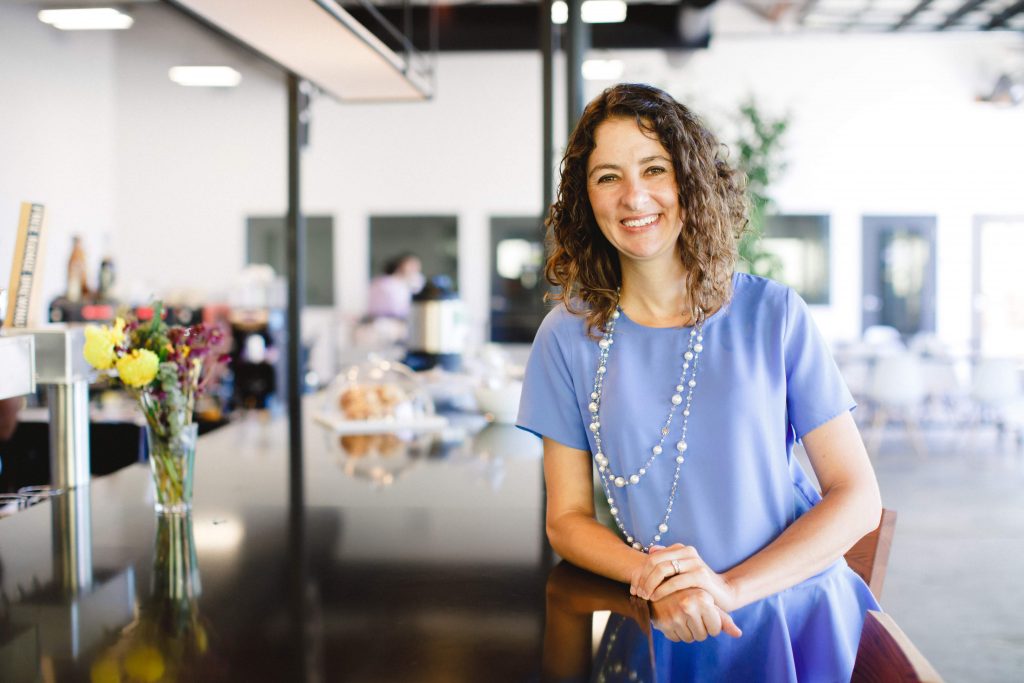
Today’s conversation is with Melanie McIntyre, the owner of Tru-Nectar, an e-commerce business selling CBD products. She started the business officially in February 2020 but had been working on researching the product and setting it up for a year prior. Tru-Nectar sells tinctures, gummies, topical, soft-gels, and dog treats all made with CBD. Melanie has always been interested and passionate about natural health for her own issues and found CBD. She did her own research on companies, tried various brands, and began to discover the benefits for herself.
Charlotte’s Web Company helped put CBD on the map without the stigma when in 2018 a Farm Bill was passed that made the cultivation of hemp legal in all states. Stipulations for how much THC, how it’s grown, and how it is cultivated. CBD comes from the hemp plant which is the same as marijuana. The difference is in how it’s cultivated. CBD can have up to .3% of THC(which is the psychedelic) and marijuana has 15-20% of THC. This product is not regulated currently by the FDA, so some CBD companies will do 3rd party testing to discover any possible pesticides or chemicals, the amount of CBD that is on the label is reflected in the product, and if there are any added ingredients. Not all CBD companies are the same so it’s important to research them and look into their 3rd party testing. Tru-Nectar products have a QR code to see the testing results for that particular batch and all have 0% THC.
Studies have shown that CBD can help with sleep issues, anxiety, stress, muscle and joint pain to name a few. For dogs, the products may help with anxiety; everyday or situation specific, and arthritis. Each of our bodies have an endocannabinoid systems that helps create overall balance. Our body produces it and sometimes could use more of it for balance which is where CBD supplements come in. Realm of Caring is a non-profit dedicated to research and findings regarding CBD products.
“It’s considered to be a supplement because our body already produces these chemicals but we may need a little more because we are in a high stress environment or we are struggling with sleep or we just have anxiety because we have a chemical imbalance or it’s just lifestyle so it just provides that extra support to create more balance.”
Melanie has been influenced by the Charlotte’s Web company which was started to support their daughter who had multiple seizures a day and found some relief with CBD. For natural health in general, Melanie has enjoyed information from Emily Schromm, a nutritionist with her website and podcast, Meathead Hippie. Melanie wants to heal Charlotte as she has been here for 16 years and see how high stress the environment is here.
“CBD is a product that can help that because it just helps to bring balance and that’s part of what Charlotte needs. You know people in Charlotte, we just need to find that balance between doing but also resting. Taking time for ourselves and not being all about this one thing but really paying attention to self.”
A healer in Charlotte who inspires her is Dr. Eric Goodman at Greenapple who is a Chiropractor and Acupuncturist. Use code “healclt” at Tru-Nectar to take advantage of the 25% discount.
Alison Pulito was a guest on the “Healing Charlotte” podcast 6 months ago and has now added Quantum Healing Hypnosis. Read about it below or book a session with her today!
As a Reiki practitioner for the past 7 years, I have worked with people presenting with an incredibly diverse range of experiences. Through this experience I have seen how deeply our experiences shape us, from an early age all the way to a ripe old age, we are shaped by the experiences we have, positively or negatively. It becomes like a filter or lens through which we view life and determines how we respond to experiences, we can grow or struggle through the same experience. I have seen this pattern repeated in people through disease, chronic injury, relationships, and mental health, all of it creating a pattern which can be followed, like breadcrumbs showing and teaching us the nature of what happened to create that impact. We are impacted by an energy that stays with us in the bio-field (the etheric field/aura) and in the psyche. What we hold and view as experience has a direct correlation to how we are impacted by it. I have noticed that putting on a new lens, a perspective on our life’s most meaningful events, and seeing the value in the experience, viewing the path with the value that followed experience, can shape and shift the impact of that experience, years even decades later.
In Reiki I was often shown the point of origin for a chronic problem, a pain, a relationship struggle, lack or limiting beliefs, forming a fairly solid foundational belief at some point in the life, even from a very early age, impressions about ourselves, others, the world. I noticed that from an early age we are programmed which is a highly effective function of the subconscious. It holds the algorithms the short cuts to our processing so we don’t need to think and process routine events. It sets us up for success it can also set us up for a distorted view of reality, through which like a prism, it colors our experience by shifting the lens. These programs are related to the energetic systems in the body through the chakra system and the auric field. Our body’s energy system is the membrane through which we experience and are affected by the energy around us and by our own energy through thoughts and emotions.
The biofield is ether, it’s highly charged and magnetic. We think ether is empty space but researchers now know that ether is actually full, it’s information, like a storage vault for potential, past present and future data. So this data is waiting for us to interact with it. And we know that our thoughts, created in the mind, are highly energetic, they carry a charge just like an electronic device. This charge sends a current of energy out into the biofield to match up with/plug in to that which we are creating in the mind. This is good if we are conscious, it’s not easy if we have a busy mind filled with doubt, anxiety, trauma or pain. We are also blessed with an electromagnetic heart. Our heart has the strongest electromagnetic field in the body, it sends a signal that can be sent across the country. This is how distance Reiki works and how prayers work. And the heart is magnetic, so emotions, sent and received in the heart, are broadcast and become magnetic, they attract that which helps us to see them, to gain perspective of them. There’s a lot going on in our biofield and a lot of us don’t even know it exists.
This mind body connection has been studied for centuries but never has it been as recognized and measured as it is today but we are just beginning to understand it. With the recognition of quantum mechanics in the last few decades and the use of Kirlian photography, which measures the bio-field of all living things, showing us that we have an energetic template that interacts with our environment and with each other. We know that the electromagnetic field, or template is a hologram of our body, that it exists as a reflection of our own energy. We have evolved to know through the work of Carl Jung and more recently Dr. Joe Despenza, we know that there are life experiences that come to us as a way to learn, to master in a way of seeing ourselves from a more evolved state as we start to wake up to our own being, to see our own place in the world, a sort of waking up.
Over time working with Reiki I was drawn to QHHT, Quantum Healing Hypnosis Technique, developed by the late Dolores Cannon. Dolores worked and researched for 40 years on the topic of how we experience a lifetime and how we experience timelines (segments of our lives) and why this happens. According to her reasearch and my belief, that we are here to learn, grow and evolve, it is really what we are here for, what our soul is here to express. I have studied and become certified in QHHT and find it quite effective in helping people see and experience their lives in ways that help them gain perspective on their life’s experiences. Imagine the impact to a 60 year old woman who under Quantum Hypnosis goes back to being a six year old, when she sees clearly (like a vivid dream), that her mother did not abandon her but was actively keeping an abusive man away form her by continuously keeping him away from the home. That shift in perspective can help to heal a limiting belief such as my mother didn’t love me, she would always leave me alone on weekends and evenings, to my mother loved me so much that she shielded me from danger. These stories have become the calling of my work, to help people see the potential in their lives, the shifts in consciousness that change the reality happen rapidly and easily using QHT.
I have also been working with coaching, as I have the gift of clairaudience and am able to read the lessons of the soul and help people to steer in the direction of their soul’s choice, providing perspective, clarity and understanding of some of life’s lessons. This has become my life’s passion of teaching people to heal themselves through energy, understanding and perspective.
I am working through Zoom and through the online classes I teach of Reiki, and 3 levels of Energy Mastery.
In this episode, we meet Crystal Emerick, the founder and Executive Director of Brave Step, a non-profit that focuses on supporting those affected by sexual violence; survivors or loved ones. This 5-year old non-profit strives to empower adults impacted by sexual violence in 3 ways; personalized care(individual counseling, group therapy, peer support groups, empowerment groups), Brave public conversations, and to cultivate Changemakers. Once a survivor or loved one reaches out, their case manager completes a thorough intake and then lays out the options. The options they currently offer are individual counseling with a highly vetted therapist and will provide financial assistance if needed for up to 26 sessions, 12-week group therapy led by a licensed therapist, peer-led support groups, empowerment groups focused on coping skills, or “Finding Your Voice” programs including storytelling, art classes, etc. They meet the survivor or loved one where they are in their healing journey. Crystal has put together a diverse group on her Advisory Board who are all trained in various trauma treatment modalities so that Brave Step can offer a combination as well as have the understanding of all offered.
“Sexual violence doesn’t discriminate, it doesn’t care what faith you are, what financial status you are, what color you are, or what culture you are. It welcomes everybody with open arms. Until we can truly embrace that and the fact that each of us is impacted in one way or another, I don’t know how we convince people of how detrimental this is to our community.”
Crystal shares her own story of surviving childhood sexual abuse. She recognized the guilt, shame, and blame that was growing inside her and told her mom about it at the age of 13. As she grew older, she turned towards what she could control which manifested into unhealthy behavioral patterns. When she moved to Charlotte in 2001, she asked her doctor for help and was referred to a therapist, Sue Anne Wrenn. During her work with her therapist, she realized that she could not turn away from how prevalent sexual assault was in the world and in 2011 was challenged to “do something about it.” She spent a good 2 years trying to figure out her role in doing something about it. In November of 2014, Brave Step officially became a non-profit and she started assembling her Advisory Board and Board of Directors. She recognized that there was not a lot of representation of adult care of sexual violence survivors. When she started the non-profit, she was running her own business in communications and public relations. She kept feeling the tug to give her all to the non-profit, so 2 years ago she closed down her business and moved over full-time. Last year, 60% of their funding came from individual donors and they continuously apply for grants. She would like to create in the future more specific programming for the loved ones of survivors but in the meantime, they can access services through Brave Step.
She has been influenced by Nancy Brinker’s book, “Promise Me.” As the founder of the Susan G. Komen Foundation, this book provided Crystal inspiration for changing people’s tolerance for talking about the difficult topics such as breast cancer and sexual violence. She wants to heal Charlotte to help those survivors either crack open or bust down the door to their healing because she understands the negative impacts on survivors, family members, communities. She wants to do this work to help future generations. Her advice for sexual violence survivors is as follows; take 1 brave baby step at a time, fight for yourself, and find community with people like you. She is inspired in Charlotte by Sue Anne Wrenn, a therapist and all of the members of her Advisory Board.
“It’s my obligation now. It’s to turn my pain into a purpose and as long as I can keep doing that and do it effectively, then I’m here to stay.”
In the short term future, Brave Step will be releasing the “Change Makers” program this year that will focus on education around sexual assault and will be diving deeper on supporting loved ones.
Visit Brave Step‘s website for more information or to get help, donate, or volunteer. You can reach Crystal directly at info@bravestep.org or 704-361-5230.
Kent Crawford is our guest on the podcast today. Neurofeedback, Brainwave Biofeedback, or EEG Biofeedback is a modality he has been practicing for 18 years. He describes neurofeedback as a technique that frees us up from our neurology. It’s a non-invasive treatment that works with the non-conscious part of the brain and frequencies we ask the brain to exercise. On a simple level, while training, the person is watching a movie with sensors on their head and the screen gets larger and smaller based on what the brain is doing in that moment. Kent has practiced many different versions of neurofeedback but enjoys the Othmer Method the best based on the quickness and depth of results. Kent says neurofeedback can help with an unlimited number of things including; depression, anxiety, autism, and obsessive-compulsive disorder. There are a minimum of 20 sessions to achieve completion and remission of symptoms but one will see results before then. Kent mentions that some conditions will need more than 20.
“It’s like our thoughts and even our emotions are a plant growing out of the soil. That is the neurology of our brain and if that soil is in a negative place, then that’s the kind of thoughts you’re are going to have.”
Kent discusses Alpha-Theta training which is another portion of the work in that it can get people to the theta state of brainwave activity that can take weeks instead of a long-term dedicated meditation practice. He says that people tend to get along with others better, care about others more, and are generally happier. Alpha-theta gets more into the emotional and spiritual space.
Kent’s journey to Neurofeedback training began after reading a book about different brain techniques and was really drawn to it. He then found a training with the Othmers and began practicing. He continues to be so impressed with the affects and how quickly success came to those he trained. Over the last 18 years, Kent estimates he has trained thousands of people’s brains and typically receives word-of-mouth referrals. Kent emphasizes that the process is non-invasive and that side-effects will happen somewhere along the course of treatment. He discusses that the side-effects are within your past range of experience and if somethings gets thrown off, he can correct it.
“It {Neurofeedback} has a foot in both camps; it has a foot in the standard healthcare camp and that camp is a ‘we’ve got a problem, let’s fix it’ kind of thing. Neurofeedback also has it’s foot in the preventative healthcare practice of making ourselves healthier so that we don’t get whatever the problem is, psychological or physiological.”
Kent is from Charlotte and enjoys the location in between the mountains and the coast. He likes the green spaces we have and that Charlotte is a financial and energy capital for the country. Visit his website or call 704-527-0071 to book an appointment or for more information.
Today’s discussion is with Susan Hughes, a 500-hour teacher focused on Therapeutic Yoga. The two provide information on different types of Yoga, hands-on assisting, finding a teacher, and other topics to help you find your Yoga home. Susan’s advice when starting your journey is to try different studios and notice how the space makes you feel.
“You get a feeling right away I feel like when you go someplace that feels like home to you. You meet teachers who feel like they have the same interests as you, you feel comfortable in that location physically and with the people that are there.”
Levels of Exertion for Styles
Power – This is a strengths based class, that includes even more flow than a vinyasa and students will usually end up very sweaty at the end of class as this is one of the more athletic styles.
Vinyasa(Flow) – Will move faster and links one breath per movement. It’s more athletic but not necessarily more advanced. The teacher will offer modifications and variations(helps make the pose more accessible for your body), and the flow is sequenced around “sun salutations.” Classes typically start with breath and centering, on to a warmup, moving into the flow where the heart rate increases, next to the cool down, and them some stretching at the end.
Basics or Beginner – Typically for beginners or anyone wanted to break down each shape for their body. The purpose is for people to learn and be able to get into poses safely. The class pace is usually really slow and may include workshopping poses or a theme. The student will learn about engagement and modifications/variations. This class is not necessarily gentle.
Gentle – This class will not have a flow state and is more athletic. Will usually explore the 6 movements of the spine(forward and back bends, twisting, lateral stretches), many poses will be from the floor with less overall exertion, and will move slowly in between shapes.
Yin(Deep Stretch is similar and different) – All poses will be on the ground and will use many props(blankets, blocks, bolsters) to hold poses for 3-5 minutes where the student will get into a meditative state. The props are to hold the body up so that it can get into a state of not totally relaxed but not totally pushing/activating. Works to help put the fascia back into place.
Restorative – Will use even more props(blankets, blocks, bolsters, eye covers, chairs) to hold the body up in a position of comfort and relaxation. In this class, there are no demands or exertion and will include a few poses. Poses are typically held anywhere from 5-7 minutes up to 20 minutes or more. The student will be able to get into a deeper state of relaxation and meditative. The classes may be warm, dark, still, and quiet.
Therapeutic – Typically done one-on-one with a highly trained teacher who will complete a whole-human reading including the injury or ailment the student entered with and will explore sleep, social support, past traumas, a spiritual practice, etc. The teacher will put all the pieces together to help the student heal.
Trauma-Sensitive – The purpose of this class is to create an environment that is as safe as possible for someone who has experienced trauma to heal. Not necessarily the only place to heal from them but an important one. The classes may not include any hands-on assisting, will offer options for poses and ways to make the poses as accessible as possible. Helps to create more interoception(noticing sensations in the body) so that the student can take good care of themself. Teachers trained in this can also help the student reframe relationships they will practice boundary setting, autonomy, and being seen in a space.
Susan and Katie discuss some other aspects of Yoga including:
Sanksrit – This is the language of Yoga. Each poses has a Sanskrit name. Some teachers will use this in class and most likely will use the English translation as well.
Safety – You can hurt yourself in Yoga and especially with repetitive motion if not done mindfully. Everyone’s bone structures are different and it’s important for a teacher to be highly trained to understand this.
Hands-On Assisting – May happen in Yoga class. The purpose of these generally speaking are for safety reasons as well as help the student deepen their experience. It’s good to know that they are not usually to correct you in a pose. Touch can be healing but sometimes it doesn’t feel safe to students. This is why it’s important to know if the teacher provides hands-on assisting and if they ask permission each time. It gives the student autonomy and choice.
Most Yoga teachers are 200-hour certified which means they have graduated from a Registered Yoga School through Yoga Alliance and have the basic knowledge of teaching Yoga. Some teachers go through an additional 300-hour program to become 500-hour certified which means they have completed more specialized training and have taken a deeper dive with understanding Yoga. During her 300-hour program, Susan recognized her passion was to help give students their power back in a yoga class.
“Giving the power back to the student is teaching them that trauma-sensitive way in an effort to let the student know that it doesn’t matter what I say, it doesn’t matter if I want your foot here and you put it here. If you are getting the experience out of the posture, you’re doing Yoga. If you’re with your breath and you are moving, you are doing Yoga.”
Katie and Susan agree that when choosing a Yoga Instructor, students look for a teacher who is at least 200-hour certified. A 500-hour certification or specialization in that style is even better. Make sure your teacher has been practicing awhile and notice how you feel in the space with that person.
Susan and Katie met at Noda Yoga when they were going through Bella Vita Yoga Teacher Training. Susan loves that she has always been recognized and acknowledged by name at Noda Yoga. The physical space is comforting to her and she appreciates Jillian’s dedication to accessible yoga. Accessible means that the space offers Yoga that everyone can participate in, the use of props, and attend to the socio-economic status of all students. Both agree that the variety of styles offered is amazing. Katie thinks the experience the teachers have is unmatched in the city.
Lastly, do you have to be flexible to do Yoga? Absolutely not! It can increase flexibility and that may not even be the intention of starting a Yoga practice.
“I think that the accessibility like representing the broad spectrum of types of people that there are in the world via our teachers and making the studio a welcoming place to every type of person is part of what makes it home for me.”
You can join Susan for a class through the Noda Yoga website or book a private session through her Instagram page.